
"coffee farm requirements"
3000 article(s) found

After-taste Lazimus Manor, Colombia, the cultivation of boutique coffee beans, geographical location and climate.
Compared with other producing countries, Colombia is more concerned with developing products and promoting production. It is this, coupled with its superior geographical and climatic conditions, that makes Colombian coffee excellent in quality and delicious and famous all over the world. The status of coffee in Colombia is evident in the following example: all vehicles entering the country must be sprayed and sterilized so as not to inadvertently cause disease and damage coffee trees.

A brief introduction to the treatment method of grinding degree and baking degree of delicious Kenyan boutique coffee beans
Kenya coffee harvest season there are two harvest seasons in Kenya, the main harvest season is from October to December and the secondary harvest season is from May to July. Large coffee processing farms in Kenya usually have independent processing facilities. A large number of small farmers usually pick ripe coffee fruits by hand. Coffee picking is a labor-intensive job, which requires the whole family to go out or even return during the harvest season.

The flavor of beans in the same coffee farm is very different. This is the secret of processing.
For professional baristas, please pay attention to the most commonly used coffee processing methods in the coffee workshop (Wechat official account cafe_style), mainly washing and tanning. Although the washing type has a wide range of use, its procedure is complex, and each procedure requires different equipment; in comparison, the traditional solarization rule is more environmentally friendly, but it may cause shortcomings such as uneven color and reduced quality. In harvesting

Yunnan small grains of coffee. How does Yunnan coffee taste? Is Yunnan coffee good?
Professional coffee knowledge exchange more coffee bean information please follow the coffee workshop (Wechat official account cafe_style) Yunnan Coffee is the main and largest coffee producing area in China. At present, Yunnan coffee producing areas are mainly distributed in Simao, Banna, Wenshan, Baoshan, Dehong and other areas in the south and southwest of Yunnan. Pu'er is a small town in Simao and the hometown of Pu'er tea.
What are the characteristics and advantages of the rise of Yunnan coffee in China to the road of high-quality coffee?
Professional coffee knowledge exchange more coffee bean information Please follow Coffee Workshop (Wechat official account cafe_style) in the recent Ministry of Foreign Affairs held the charm of Yunnan World sharing global promotion activity, Yunnan coffee blue hall, attracted the world's attention, Foreign Minister Wang Yi praised Yunnan coffee: it is the best coffee that I have traveled all over the world and tasted coffee from every country in the world. Cloud

How to buy authentic Kona coffee beans in Hawaii
Professional coffee knowledge exchange More coffee bean information Please pay attention to coffee workshop (Weixin Official Accounts cafe_style) Hawaiian coffee real labeling method Introduction Hawaiian coffee labeling method Q & A, let's see how they are responsible for producers and consumers. Hawaii has already had imported beans mixed with native beans. After what happened, their reflexivity

How to identify the authenticity of Hawaiian kona coffee why Hawaiian Kona coffee is so expensive
Professional coffee knowledge exchange more coffee bean information please follow the coffee workshop (Wechat official account cafe_style) Hawaiian Coffee Real labeling introduction Hawaiian Coffee labeling Q & A, let's see how they are responsible for producers and consumers. It has already happened in Hawaii that imported beans are mixed with beans of origin. After what happened, their opposition

What's the difference between ORC cherry and aricha? What is the native species?
Professional coffee knowledge exchange more coffee bean information please follow the coffee workshop (Wechat official account cafe_style) Ethiopian coffee mainly has eight major producing areas, namely: Lekempti, Limu, Illubabor, Djimmah, Harar, Teppi/Bebeka, Sidamo, Yirgacheffe. Yejasuefei is a small town in Ethiopia, 1700-2100 meters above sea level

Introduction to the treatment of raw coffee beans-tanning method
Sun treatment will first identify sunken beans in the sink, that is, ripe or half-ripe beans are spread in the drying farm for natural drying. The specific time depends on the local climatic conditions, which usually takes two to four weeks. When the moisture of the coffee bean is reduced to 12%, then use a sheller to grind off the hard pulp and silver skin. The requirement of the sun treatment on the climate is very high.
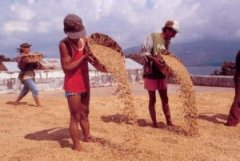
Introduction to the treatment of raw coffee beans in the sun
Sun treatment will first identify sunken beans in the sink, that is, ripe or half-ripe beans are spread in the drying farm for natural drying. The specific time depends on the local climatic conditions, which usually takes two to four weeks. When the moisture of the coffee bean is reduced to 12%, then use a sheller to grind off the hard pulp and silver skin. The requirement of the sun treatment on the climate is very high.

Introduction of Kenyan Coffee Flavor and Taste Fine Coffee beans in Kenya Coffee producing area
Founded in 1999 in Embu, Kenya, the cooperative has 1200 active growers and the cleanest water treatment centers. It is well known that cooperatives pay producers far higher than government requirements. In Kenya, cooperatives have to pay 80 per cent of the final income to coffee farmers, and Kithungururu ends up paying 95 per cent more to coffee farmers than other cooperatives. [producing area] in Kenya

Introduction to the production process of Honey-treated Coffee Bean Solar washing processing Plant
The production process of honey-treated coffee beans is introduced in the production process of sun-washing treatment of coffee beans. The three are distinguished according to the time of sun exposure and the amount of pectin, and the amount of pectin and endocarp determines the time of sun exposure. Yellow honey has 25% endocarp, 50% red honey and 100% black honey. Therefore, from yellow honey to black honey, the drying time is longer, and the management requirements are more stringent. If you have to pick out

Hawaiian Coffee Plantation introduces the best time for Kona Coffee Farm trip to explore coffee factories
100% pure Kona coffee is a rare commodity grown only in North Kona and South Kona. The Hualalai volcano on the slopes of Kona has high altitude, continuous clouds and fertile volcanic soil to create an ideal environment for harvesting this unique Hawaiian coffee bean. Kona has hundreds of coffee farms, from the art town of Holualoa to Kealakekua, many of which offer tours to the public.

What is coffee?
The word coffee comes from the Latin genus coffea. This genus is a member of the Rubiaceae family of plants, which has more than 500 species and 6000 varieties, most of which are tropical trees and shrubs.

Sun Yega Chuefei Review: comparison between ORC Red Cherry and Aricha
Professional coffee knowledge exchange more coffee bean information please follow the coffee workshop (Wechat official account cafe_style) Ethiopian coffee mainly has eight major producing areas, namely: Lekempti, Limu, Illubabor, Djimmah, Harar, Teppi/Bebeka, Sidamo, Yirgacheffe. Yejasuefei is a small town in Ethiopia, 1700-2100 meters above sea level

Introduction to the treatment of high-quality coffee and raw beans-tanning method
Sun treatment will first identify sunken beans in the sink, that is, ripe or half-ripe beans are spread in the drying farm for natural drying. The specific time depends on the local climatic conditions, which usually takes two to four weeks. When the moisture of the coffee bean is reduced to 12%, then use a sheller to grind off the hard pulp and silver skin. The requirement of the sun treatment on the climate is very high.

Introduction to La Azotea Manor Azteia, Guatemala. How to make Azteia Coffee in Guatemala
Professional Coffee knowledge Exchange more information about coffee beans Please follow the Coffee Workshop (official Wechat account cafe_style) La Azotea Jocotenango outside a huge Guatemalan coffee plantation with three museum complexes. The museum's coffee shop covers the history and process of coffee cultivation; Casa K ojom has an exquisite collection of traditional Mayan instruments and masks

Introduction to the storage and baking of coffee beans in China
The number of coffee beans picked depends on a variety of factors, the most obvious being the height of the trees and the layout of the farm or plantation. On average, the average farm picker can pick 50-100 kilograms a day. However, only 20% of these coffee beans are real coffee beans, so the average picker can only pick 10-
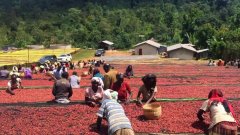
Top quality Yega Snow Coffee Fine Coffee Red Cherry, what's the flavor?
Professional coffee knowledge exchange more coffee bean information please follow the coffee workshop (Wechat official account cafe_style) Ethiopian coffee mainly has eight major producing areas, namely: Lekempti, Limu, Illubabor, Djimmah, Harar, Teppi/Bebeka, Sidamo, Yirgacheffe. Yejasuefei is a small town in Ethiopia, 1700-2100 meters above sea level

Introduction to the characteristics of Grinding degree of Brazilian Hilado Coffee Bean Flavor description method
Brazilian coffee beans and Brazil because of flat and monotonous terrain, coffee farms are mostly less than 1000 meters above sea level, and it is customary to use the sun-exposed planting method, which is originally inconsistent with the high-altitude shade planting required by high-quality coffee beans. coincidentally, however, it has developed a unique Brazilian soft bean flavor with low acidity and heavy nutty flavor, sweet and mellow, and no obvious floral and fruity aroma. But for coffee gluttons,